Helping an Older Dog With Stairs and the Car
Updated November 7, 2026 · 7 min read
The short answer
To help an older dog with stairs and the car, give them a way to step up instead of jump: pet steps for the couch or bed, a gently sloped ramp for the car, and a padded lift harness so you can steady them. Add grip to the stairs, gate them when you're not watching, and if you must lift a big dog, support the chest and rear together and lift with your legs. If your dog suddenly refuses to climb, wobbles or falls, see your vet first.
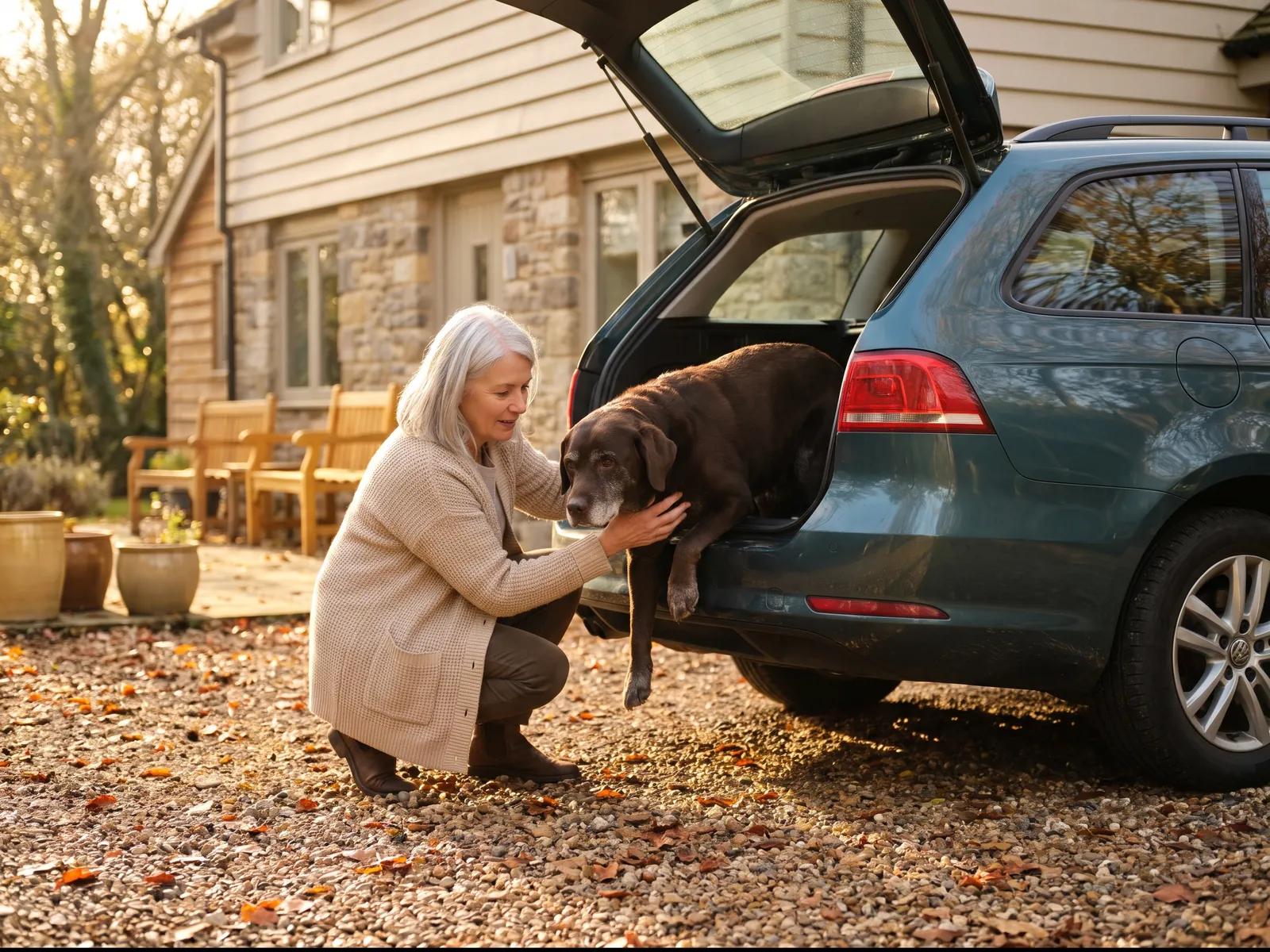
How can I tell my dog is finding stairs or the car hard?
Most dogs don't complain. They quietly change how they do things. A senior pet vet quoted by the American Kennel Club (AKC) points out that dogs tend to hide discomfort and simply stop doing what bothers them, so the signs are easy to miss. Watch for:
- Stopping at the first step or the open car door and looking at you.
- Several false starts before a jump, or back legs that scrabble to follow.
- Hopping up the stairs with both back legs together, or coming down slowly and sideways.
- Waiting on one floor instead of following you up or down.
- No longer jumping onto the couch or bed they used to love.
Ramp, steps or a lift harness: which does my dog need?
Each does a different job. Choose by your dog's size, their confidence, and the height they need to reach. AKC notes that dogs who are wary of new things may take to a ramp more easily than to steps, and a ramp can start at a low angle and rise as your dog gains confidence.
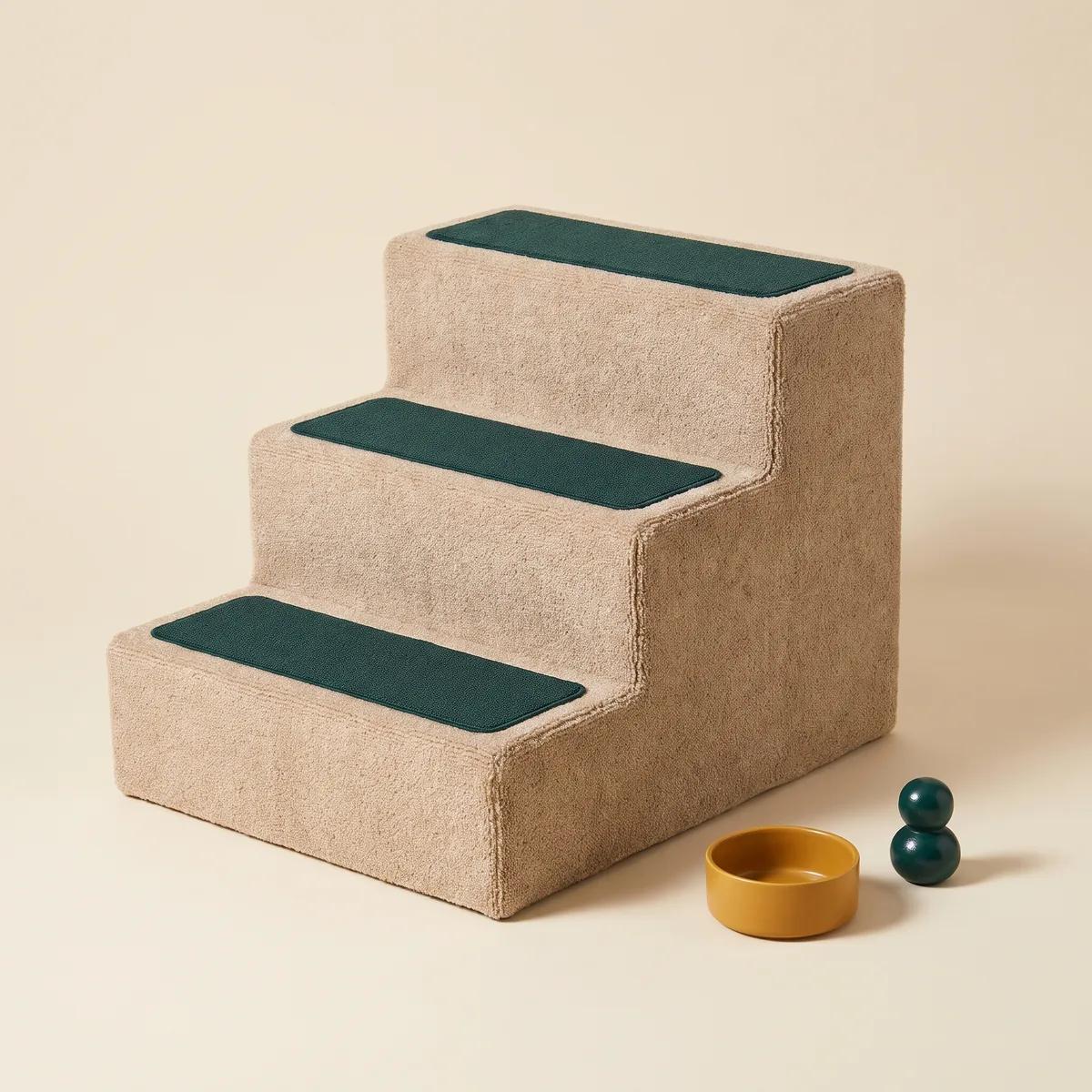
- Pet steps: for dogs with good balance who find it hard to jump onto the couch or bed. AKC suggests deep steps with an anti-skid surface; rounded tread edges help too.
- A ramp: for dogs who find steps hard, big dogs who can no longer hop into the car, and long-backed breeds such as Dachshunds and Corgis, whose backs are better spared the jolt of jumping. Look for a gentle slope, a non-slip surface, enough width and a weight rating that covers your dog.
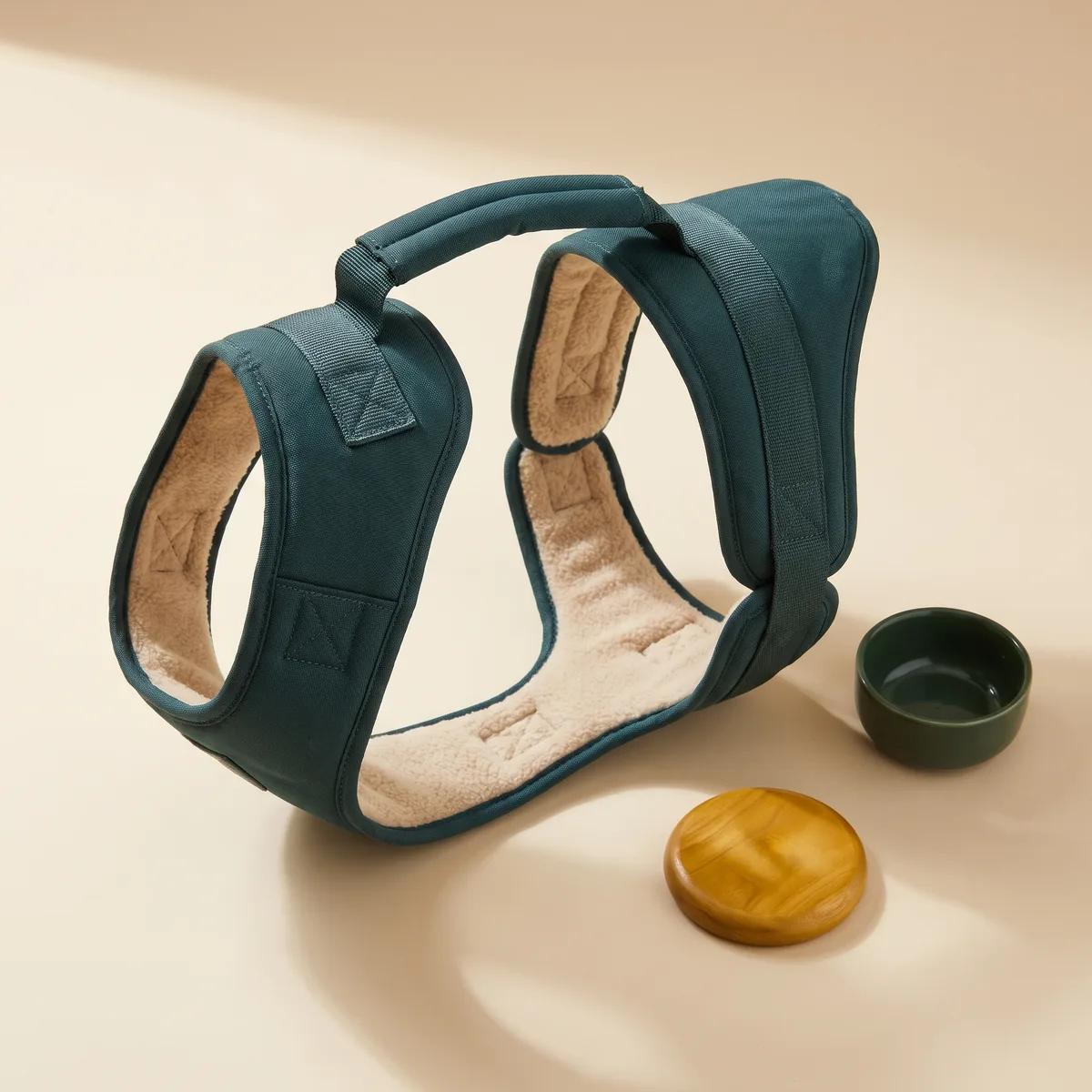
- A padded lift harness: for dogs who can still walk but need a steadying hand on stairs, into the car or getting up. Its handle lets you take some of their weight.
- Height: steps or a ramp should reach the full height of the couch, bed or car floor, so there's no jump left at the end. Measure before you buy.
How do I teach my dog to use a ramp or steps?
Plan on a few short sessions. A ramp feels and sounds different from the floor, and an older dog needs to trust it first.
- Start with the ramp flat on the floor or at its lowest angle, and let your dog sniff and walk across it.
- Set it on a stable surface so it doesn't wobble. AKC also suggests a wall or barrier along at least one side, so your dog can't step off the edge.
- Lure each step with small food rewards or a favorite toy, and praise every bit of progress.
- Never pull, push or scold a dog who hesitates. Go back to the last step they were happy with.
- Raise the angle a little at a time, then try it at the couch or the car.
How do I lift a big dog without hurting either of us?
A heavy dog is an awkward load, and many owners have backs and knees of their own to protect. Lift only what you can manage comfortably, and get a second person for a big dog.
The ASPCA's advice for large dogs is to lift from underneath, supporting the chest with one arm and the rear end with the other. Lifting both ends together keeps your dog's back level.
- Move slowly and talk to your dog, so they don't twist or kick.
- Squat close with your feet apart, keep your back straight, and lift with your legs.
- Hold your dog close to your body, and turn with your feet rather than twisting.
- Never lift a dog by the front legs, the tail or the scruff.
- If your dog can walk but needs help, use a lift harness instead. VCA Animal Hospitals notes that a supportive harness can help you lift with little strain on your back.
- If your dog yelps, snaps or stiffens when lifted, stop. Something may hurt, and that's a call for your vet.
How do I make the stairs at home safer?
Stairs combine a climb, a drop and often a slick surface. A few changes help, and they make the stairs safer for you too.
- Add grip to every tread. VCA suggests a carpet runner or stick-down grip tape.
- Put a baby gate or pet gate at the top of the stairs, and at the bottom if needed. AKC recommends gates so a senior dog can't try the stairs alone and fall.
- Light the staircase well, including at night, so the edges of the steps are easy to see.
- Walk beside your dog with a hand on the harness handle, one step at a time.
- If your vet suggests cutting back on stairs, set up your dog's bed, water and favorite spot on one floor.
How can I make car trips easier and safer?
Jumping out of a car is a long drop onto a hard surface, and VCA notes that dogs who struggle to get around are especially prone to injury jumping in or out. Make it a supported step every time.
The American Veterinary Medical Association (AVMA) advises that pets ride restrained, in a safety harness, crate or carrier. Choose a car harness that works with your seat belt and keeps your dog sitting upright: a lift harness is for helping your dog move, not for the ride.
- Use a ramp at a gentle angle. Resting its foot on a curb makes the slope gentler.
- Lay a non-slip mat or a seat cover with a grippy back where your dog rides. A waterproof cover also protects the seat from muddy paws and the odd accident.
- Keep your dog off the front seat. AVMA warns that in a crash, airbags can hurt a pet that isn't restrained.
- Never let your dog jump out on their own. Unclip the seat belt tether, set up the ramp or lift them down, then let them step out.
- Never leave your dog alone in a parked car, whatever the weather.
What else helps an older dog keep climbing?
Gentle, regular walks keep the leg muscles working, and a lean weight means less for older legs to push up each step. Ask your vet to suggest a target weight.
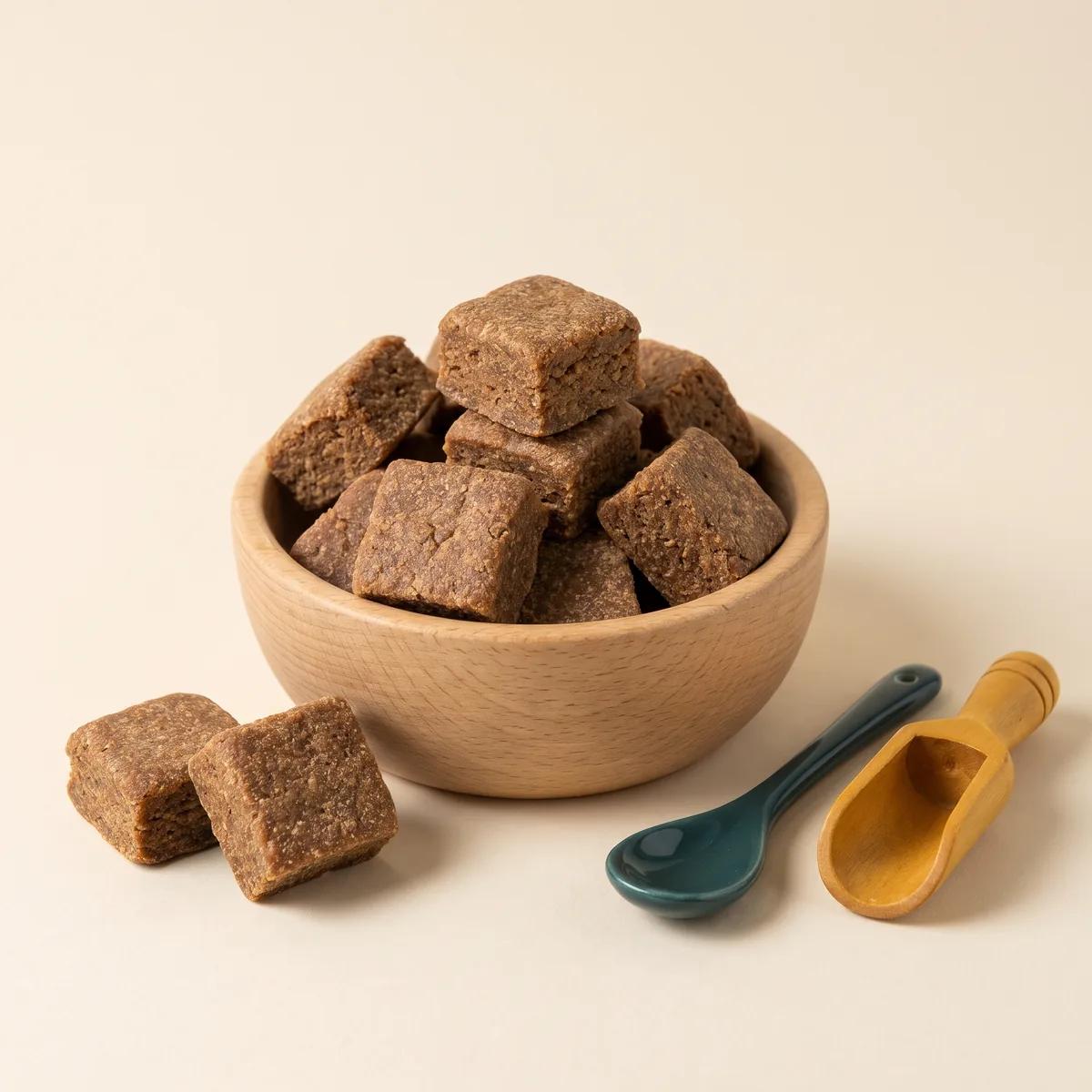
Some owners also add a joint supplement to support joint health and comfortable movement, such as one made for large breeds. Check with your vet first, especially if your dog takes other medicines, and follow the label.
From the Keep Moving shelf
Common questions
›Is a ramp or pet steps better for an older dog?
It depends on the dog and the job. Pet steps suit dogs with good balance who find it hard to jump onto the couch or bed, and they take little floor space. A ramp suits dogs who struggle with steps, big dogs getting into the car, and long-backed breeds. Whichever you choose, it should reach the full height, have a non-slip surface, and fit your dog's width and weight.
›How do I get my big old dog into the car?
Use a ramp at a gentle angle with a non-slip surface, teach it at home first with rewards, and keep a lift harness on so you can steady your dog's back end. If you have to lift, get a second person, support the chest and the rear together, and lift with your legs. Then buckle your dog in with a car harness that attaches to the seat belt.
›Why won't my senior dog go up the stairs anymore?
Older dogs often stop climbing because the stairs have started to feel hard: stiff joints, weaker back legs, fading eyesight or a slip they remember can all play a part. It can also mean something hurts. If the change is sudden, or comes with limping, wobbling or crying out, call your vet before you try home fixes. Otherwise, add grip, use a harness and gate the stairs when you're out.
›Should I block the stairs for my senior dog?
When you can't supervise, yes. AKC recommends baby gates or pet gates so an older dog can't try the stairs alone and fall, especially at night. Put one at the top of the stairs and, if needed, at the bottom. When you're there to help, a harness with a handle, grippy treads and good lighting make the stairs safer for both of you.
›Can I use a lift harness to buckle my dog into the car?
No. A lift harness is made for helping your dog up steps, into the car or onto their feet, not for holding them in place while you drive. For the ride itself, AVMA advises a car harness that works with your vehicle's seat belt and keeps your dog sitting upright, or a secured crate. Keep the lift harness handy for getting out at the other end.
Not sure where to start?
Take the 60-second quiz to see your dog's age in human years and get a daily routine built around them.
Take the dog age quizSources
- Dog Stairs vs. Ramps: Choosing the Right Option for Your Dog (American Kennel Club)
- Senior Dog Comfort: Tips for Making Your Home More Accessible (American Kennel Club)
- Creating a Comfortable Home for Your Mobility Compromised Dog (VCA Animal Hospitals)
- General Dog Care: Handling (ASPCA)
- Pet Safety in Vehicles (American Veterinary Medical Association)
These statements have not been evaluated by the Food and Drug Administration. Kennara products are not intended to diagnose, treat, cure or prevent any disease, and they don't replace veterinary care.