Senior Dog Home Modifications: Simple Changes, Room by Room
Updated November 7, 2026 · 6 min read
The short answer
The most useful home changes for a senior dog are simple: non-slip rugs or runners on the routes they use most, pet steps or a ramp where they jump, a gate at the top of the stairs, night lights on the way to the water bowl and door, and a supportive bed in a quiet spot. Keep furniture, bowls and the bed where they are, and make the trip outside short and easy. This room-by-room plan is based on the home changes in the 2023 AAHA Senior Care Guidelines.
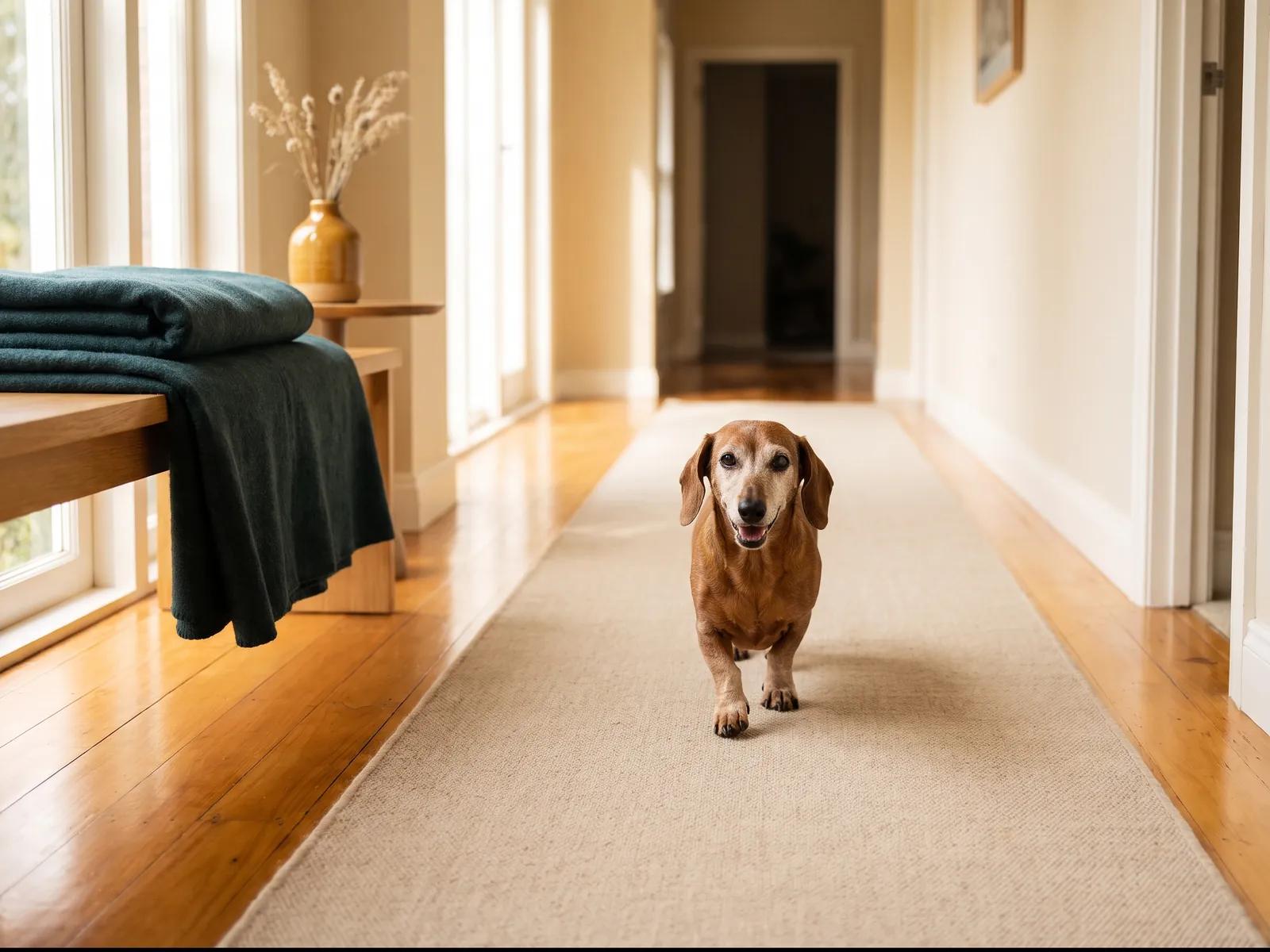
Why does an older dog need changes at home?
The American Animal Hospital Association (AAHA) counts a dog as a senior in the last 25% of their expected lifespan. By then many dogs have less muscle, slower balance and weaker eyes or ears. VCA Animal Hospitals notes that dogs who feel unsteady on hard floors walk carefully, with short steps and a hunched back, which can leave them stiff and less active.
AAHA's 2023 senior care guidelines, written for veterinary teams, list home changes for vets to discuss with owners: ramps, rugs or yoga mats for better footing, suitable beds, and checking the home and yard for hazards such as stairs and pools. The plan below follows them room by room, and our free senior-dog home checklist helps you tick them off.
Start by getting down to your dog's eye level, as VCA suggests, and watching where they hesitate, skid or bump into things.
How do I give an older dog better grip on smooth floors?
You don't need wall-to-wall carpet: cover the routes your dog uses every day on hardwood, tile and laminate.
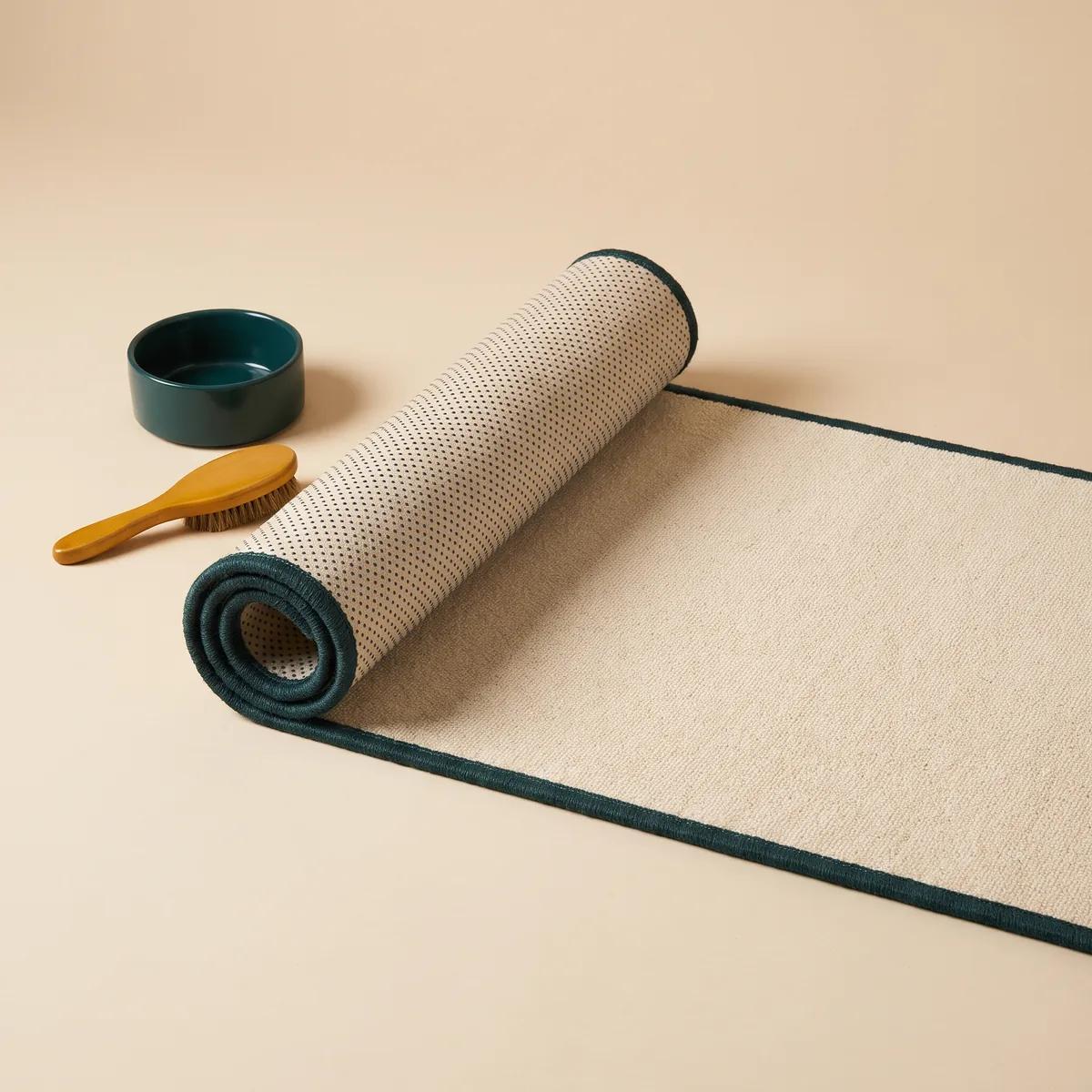
- Lay non-slip rugs or runners from the bed to the water bowl, along the hallway and by the back door. The American Kennel Club (AKC) also suggests inexpensive yoga mats.
- Choose a non-slip backing, and avoid raised corners or edges, which VCA warns can trip a dog.
- Leave no gaps of bare floor between rugs, and put a mat where your dog gets up from the couch or bed.
- Keep nails short and trim the fur between the paw pads, since both affect grip.
- Ask your vet before trying toe grips, socks or boots.
What helps in the living room and bedroom?
Jumping on and off the couch or bed is hard on older legs, and the landing is where many falls happen. Steps or a ramp let your dog keep their favorite spots without the jump.
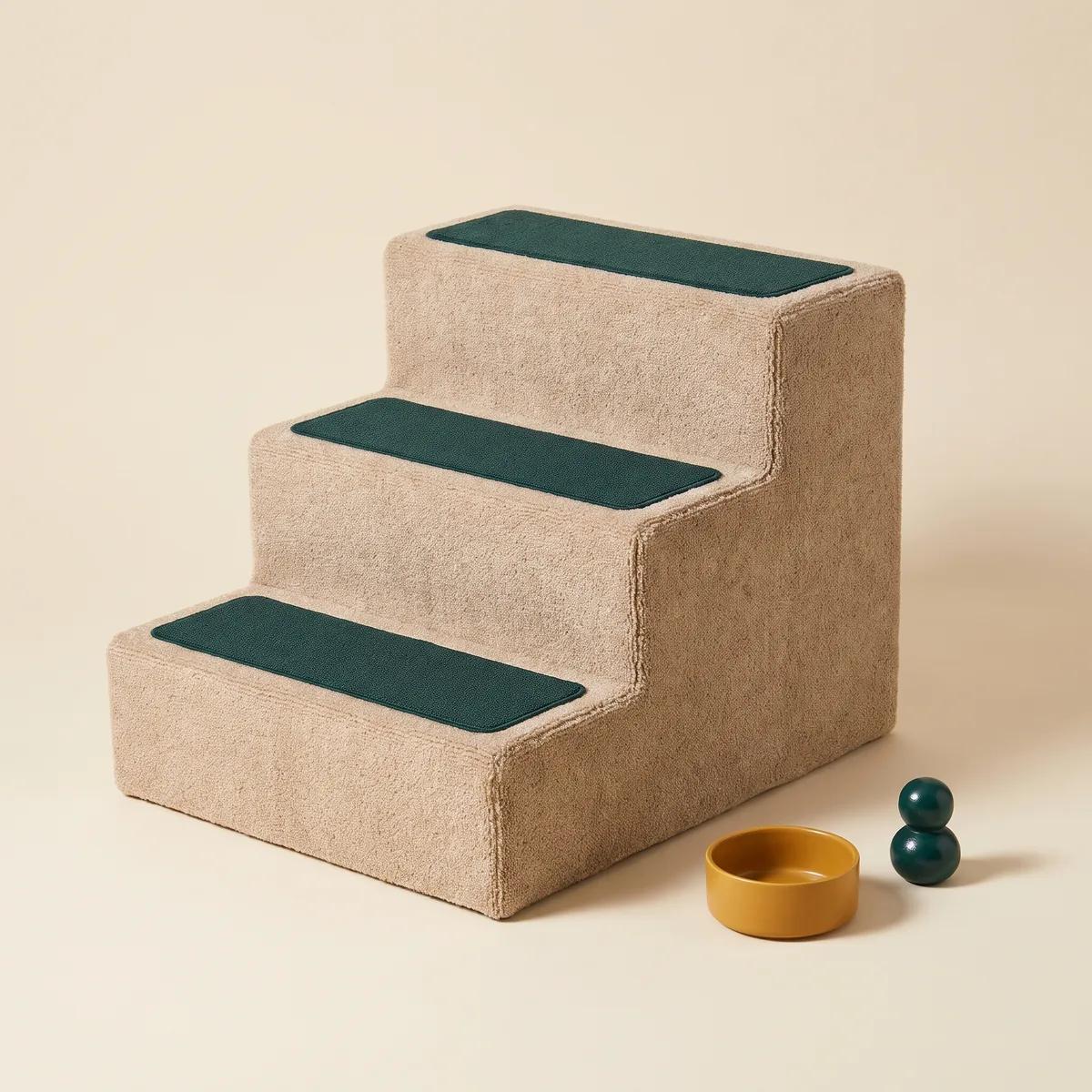
- Steps: AKC suggests deep steps with an anti-skid surface such as carpet, rounded edges, and a weight rating that covers your dog.
- Ramps: look for a gentle slope and a non-slip surface. VCA adds that it should be sturdy and built so your dog can't fall over the side. Teach either one slowly, with rewards.
- Bed: a supportive orthopedic or memory-foam bed with a low edge, so your dog steps in rather than climbs, in a quiet spot out of drafts where they can still see you.
- If your dog uses more than one floor, a bed on each saves trips on the stairs.
How should I handle the stairs?
Stairs are a big risk for a dog who is unsteady or sees less. AAHA's guidelines include barriers and gates among home changes for seniors, and VCA notes that a baby gate may be the best answer when your vet advises avoiding stairs.
- Put a gate at the top of the stairs, and keep it closed at night and when you're out.
- Give stairs your dog still uses some grip with a carpet runner or stick-down grip tape, as VCA suggests.
- For a dog whose eyes are fading, AKC suggests a mat with a different texture at the top and bottom, so they can feel where the stairs start and end.
Where should food and water go?
AKC advises keeping the food bowl, water dish and bed in the same place: together they become a home base your dog can return to if they feel lost elsewhere in the house.
- Set the bowls on a large non-slip mat, which AKC notes also helps a dog who sees less feel they're in the right spot.
- Add a second water bowl on another floor your dog uses, and tell your vet if they start drinking much more than usual.
- Raised bowls come up often for dogs who find it hard to bend down. For large, deep-chested dogs the evidence on them is mixed, so ask your vet first.
How do I help a dog who sees or hears less get around?
Dogs cope well with fading eyesight when their home stays the same. AKC advises against rearranging furniture or bringing in new pieces, which can become obstacles.
- Keep walkways clear of bags, laundry baskets and clutter.
- Make paths your dog can feel: AKC suggests carpet or yoga mat paths to the bowls, the bed and the door.
- Pad sharp corners, such as a fireplace hearth. VCA suggests pool noodles.
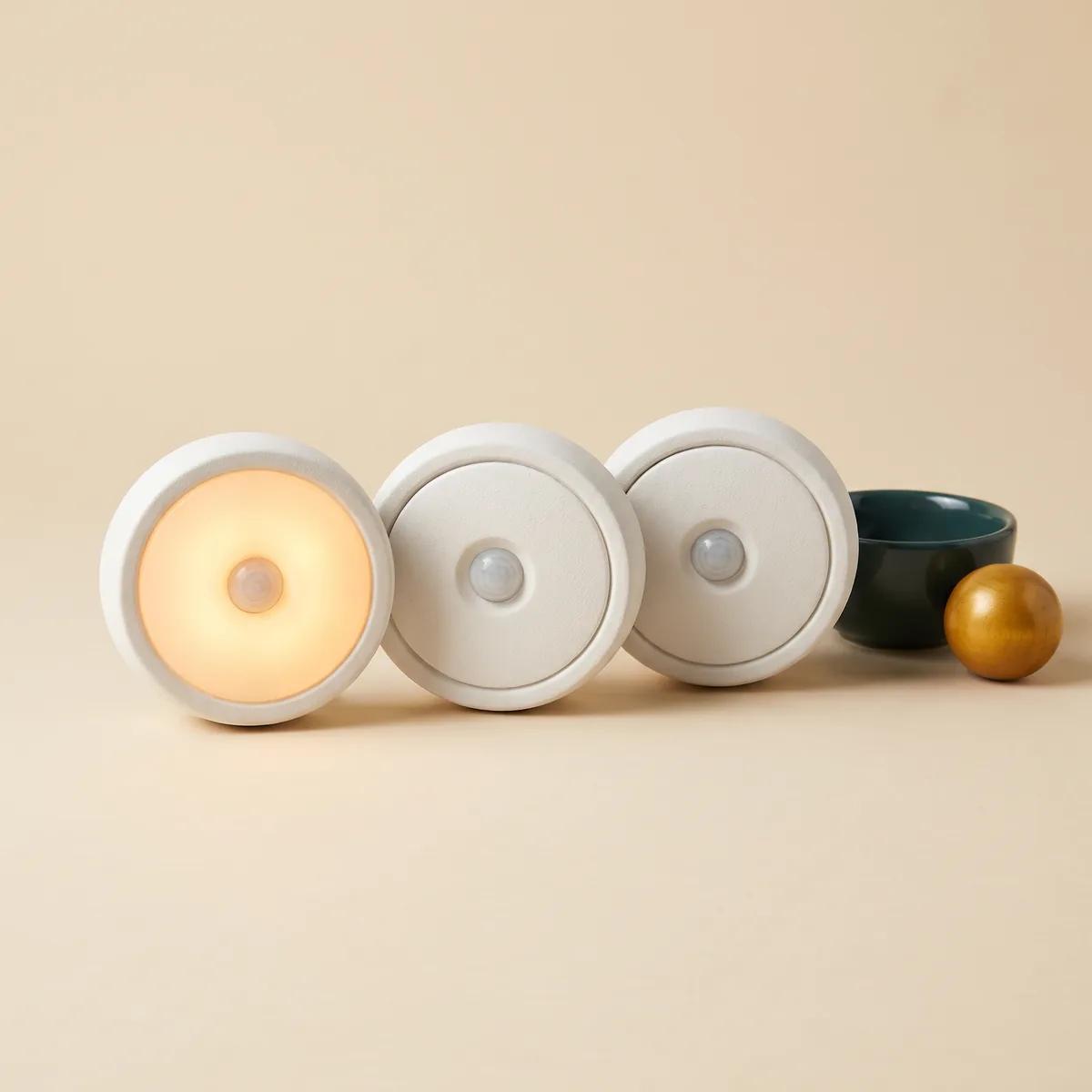
- Add night lights from the bed to the water bowl and the door. AAHA lists night lights, sound machines and temperature control among changes that make home calmer for seniors.
- For a dog who hears less, let them see you coming before you touch them.
How can I make the trip outside easier?
AAHA's guidelines suggest moving a dog's resting area closer to the door, which shortens the trip when they need to go.
- Give outdoor steps grip, or add a ramp with good traction. AKC suggests textured stair treads outdoors as well as in.
- Light the path to the yard for night trips.
- Walk the yard for hazards: AAHA mentions stairs and pools, and AKC suggests checking for sharp objects and low branches if your dog sees less.
From the Keep Moving shelf
Common questions
›Should I put a baby gate on the stairs for my old dog?
If your dog is unsteady, sees less, or your vet has advised avoiding stairs, yes. A gate at the top, closed at night and when you're out, keeps them from a fall. Add grip to any stairs they still use, and use a support harness to steady a bigger dog.
›Should I move furniture if my senior dog is losing their sight?
No. AKC advises keeping the layout of your home the same, because dogs with fading eyesight cope best when things stay where they expect them. If something has to change, guide your dog around it on a leash a few times.
›Are raised food bowls good for older dogs?
They can make eating and drinking easier for a dog who finds it hard to bend down, but for large, deep-chested breeds the evidence on raised bowls is mixed. Ask your vet whether one suits your dog, and at what height, before you change anything.
Not sure where to start?
Take the 60-second quiz to see your dog's age in human years and get a daily routine built around them.
Take the dog age quizSources
- 2023 AAHA Senior Care Guidelines for Dogs and Cats (Journal of the American Animal Hospital Association)
- Senior Dog Comfort: Tips for Making Your Home More Accessible (American Kennel Club)
- Vision Loss in Dogs: Signs, Symptoms, and Management (American Kennel Club)
- Creating a Comfortable Home for Your Mobility Compromised Dog (VCA Animal Hospitals)
These statements have not been evaluated by the Food and Drug Administration. Kennara products are not intended to diagnose, treat, cure or prevent any disease, and they don't replace veterinary care.