Choosing a Bed for an Older Dog: What Actually Matters
Updated November 7, 2026 · 7 min read
The short answer
A good bed for an older dog supports their whole body without flattening, is easy to step onto, and is big enough to stretch out on. Look for a thick, firm foam base such as memory foam, a low edge, a removable washable cover, and a waterproof layer if accidents happen. Then put it somewhere quiet, warm and draft-free, near the family, where it won't slide on the floor.
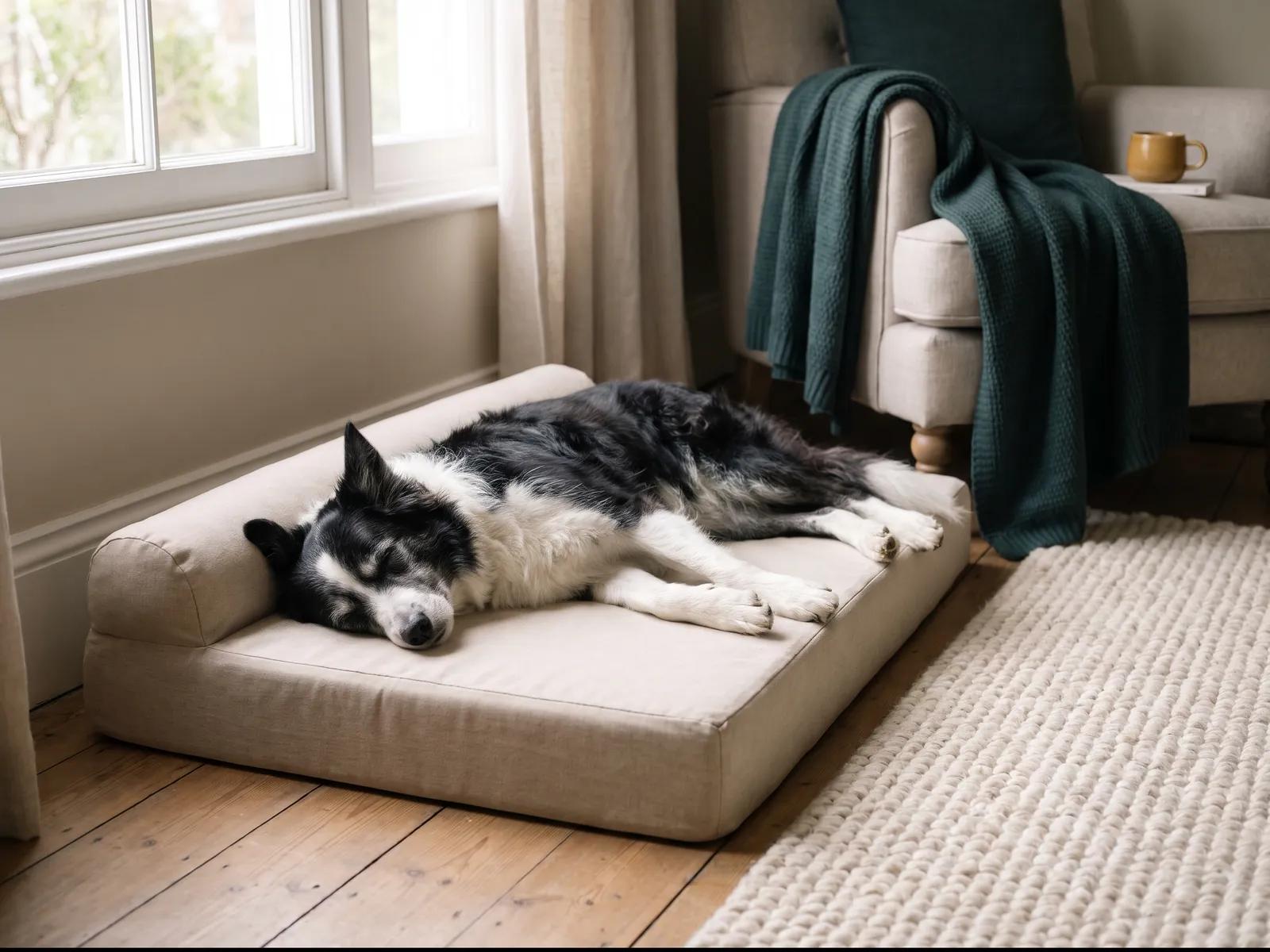
Why does an older dog need a more supportive bed?
Older dogs spend more of the day lying down, and many carry less muscle than they used to. VCA Animal Hospitals notes that less exercise can mean reduced muscle tone. With less natural padding over the hips, elbows and shoulders, a thin bed or a hard floor presses right on those bony points.
Stiff joints add to it. Lying down and getting up take more effort, so a bed that sinks to the floor or slides away makes every move harder. VCA's senior care advice is simple: older dogs should have easy access to a warm, comfortable bed where they can sleep without being disturbed.
So a good senior bed does three things: it spreads your dog's weight evenly, stays firm enough to push up from, and is easy to get on and off.
What kind of foam should a senior dog bed have?
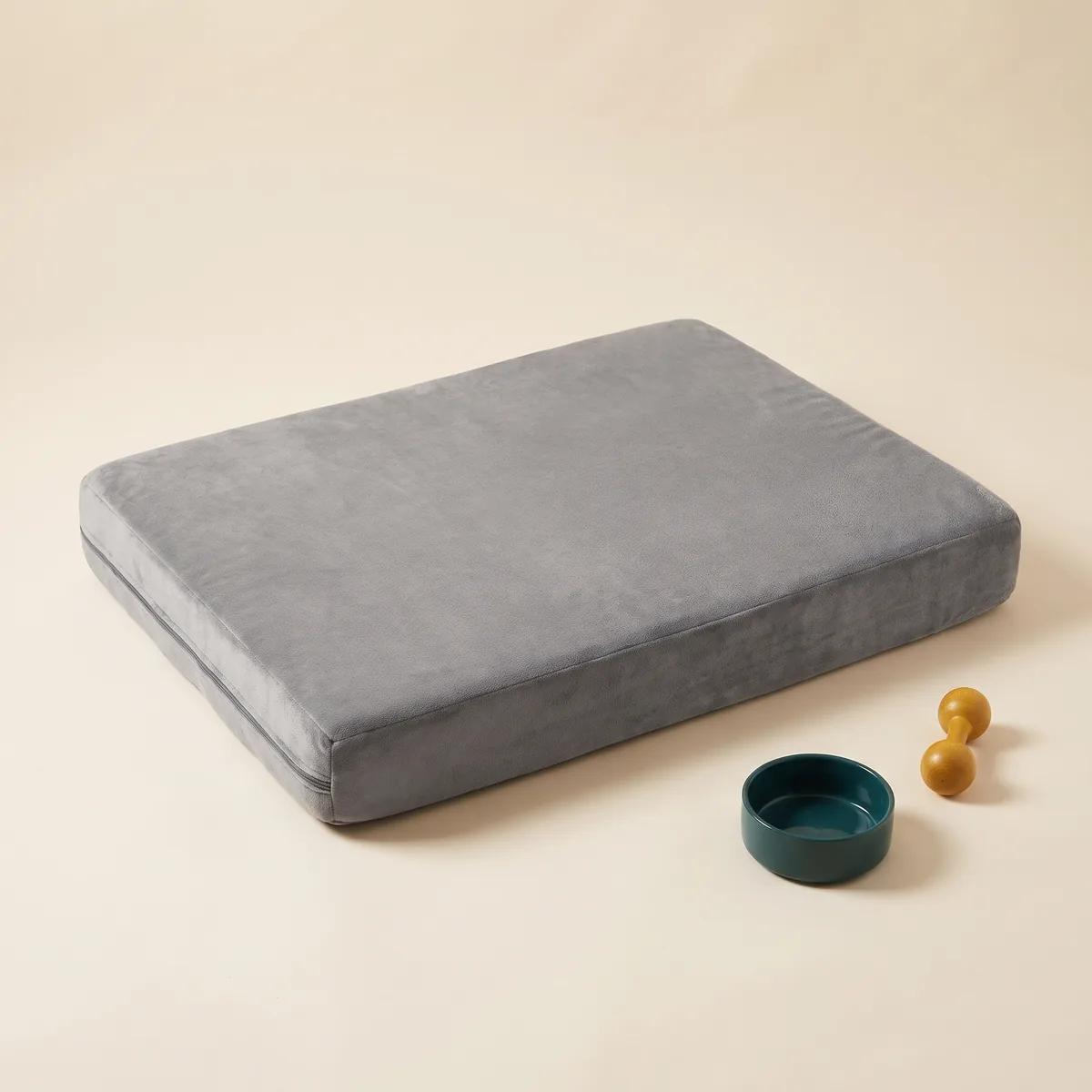
What's inside matters more than the cover. The American Kennel Club (AKC) notes that memory foam molds to a dog's body and adjusts to how their weight is spread, and that thick, high-quality foam spreads weight evenly and gives firm support.
- Memory foam: softens with body warmth and shapes around hips and shoulders. Many beds put it on top of a firmer base foam, so your dog sinks in a little but not all the way.
- Egg-crate foam: the bumpy kind. It's lighter and usually costs less, but thinner pieces can flatten under a bigger dog. Check the solid base, not just the peaks.
- Polyfill or fiber stuffing: soft at first, but it tends to clump and flatten. It suits a small, light dog or a cozy topper, less so a heavy dog.
- Thickness and density: press down hard with your fist in the middle. If you can feel the floor, it's too thin or soft for a heavy dog. Bigger dogs need thicker, denser foam.
- Foam certification: ask whether the foam is certified, for example by CertiPUR-US, a program that tests the foam itself for emissions and certain chemicals, including some flame retardants. It covers the foam, not the cover. If you'd rather avoid added flame retardants, ask the maker directly.
What size and shape should the bed be?
Many older dogs sleep stretched out on their side rather than curled up, so measure them that way. While your dog lies flat, measure from nose to the base of the tail and from the top of the back to the paws, then add a hand's width or two all round so elbows and back legs don't end up on the floor.
Then look at the way in. VCA suggests low-entry or recessed orthopedic beds that a dog doesn't have to climb onto. A bed with one low side, or none, lets your dog walk straight on. Bolsters are fine as a headrest, as long as getting in doesn't mean stepping over one. AKC notes that a raised cot bed can be easy to get on and off and lets air move underneath, so check its height against your dog's legs.
Should the cover be washable and waterproof?
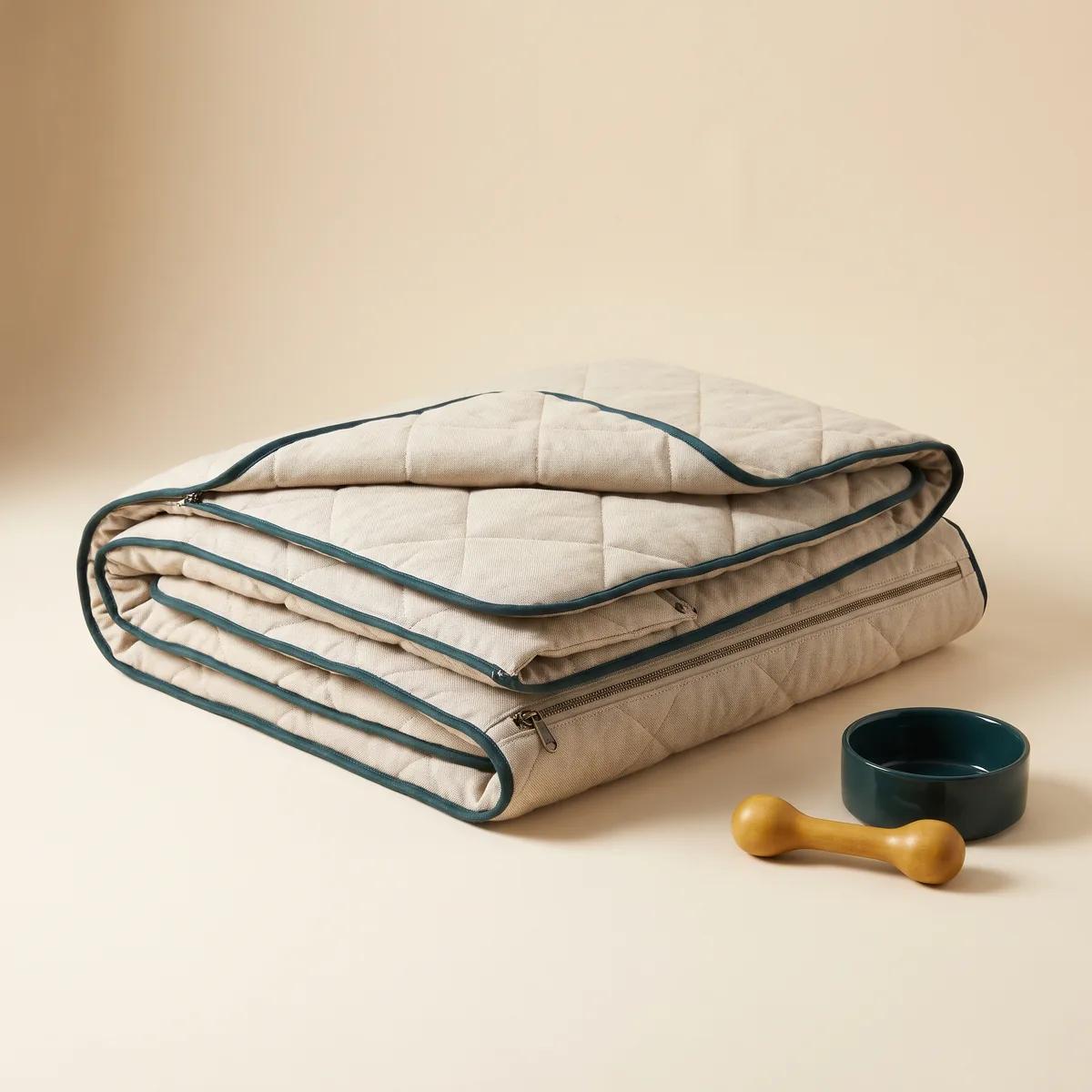
Yes. VCA advises a machine-washable bed or cover, since dogs who have trouble getting around may have more accidents. Foam is hard to clean once it's wet, so a waterproof layer between cover and foam is worth having even if accidents are rare.
- A zip-off cover you can put in the washing machine, plus a spare so there's always a clean one on.
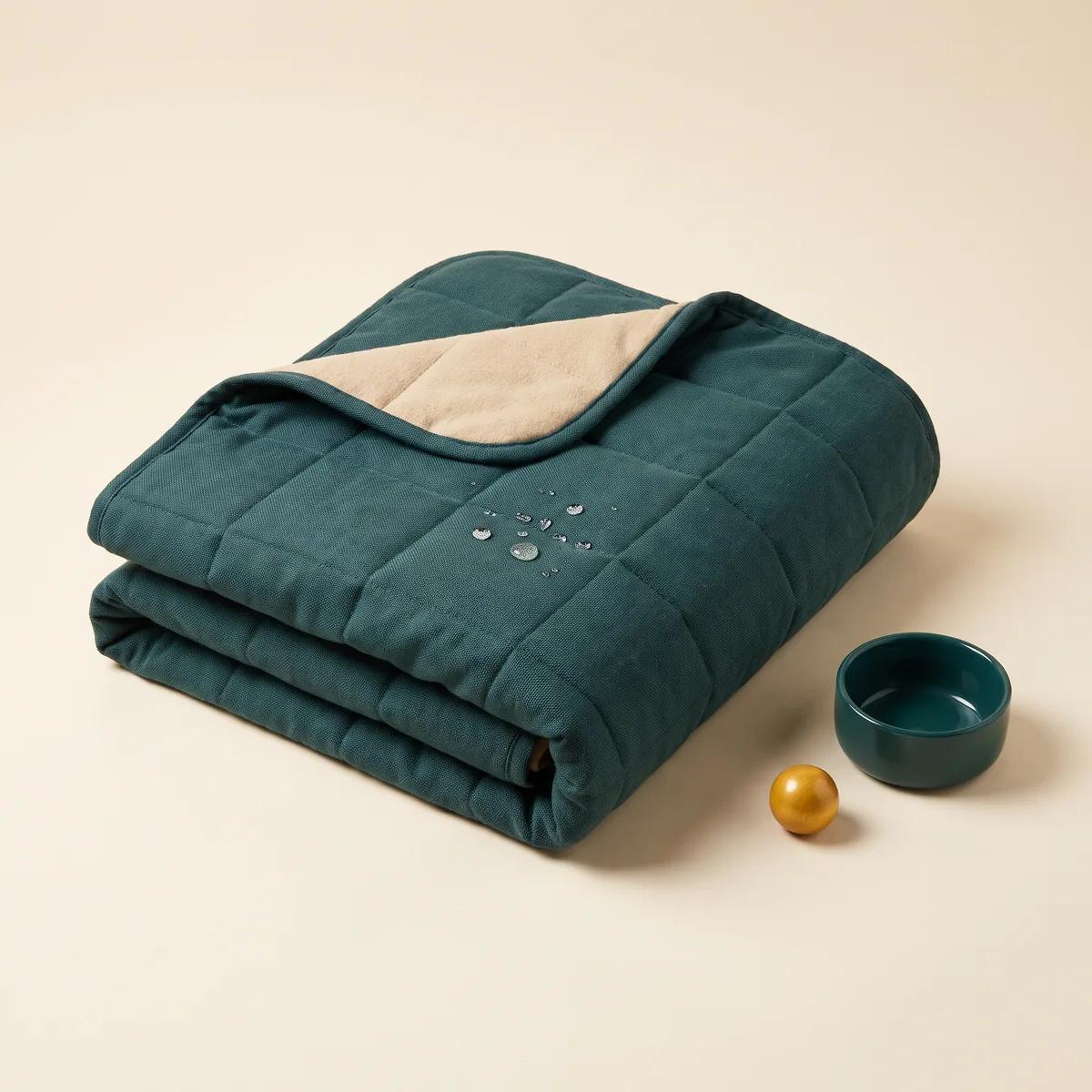
- A waterproof liner or inner cover to keep the odd leak, drool or muddy paw out of the foam.
- A washable waterproof blanket on top, which also works on the couch or the back seat.
- A non-slip base, so the bed stays put when your dog steps on or pushes up.
- Dry everything fully before it goes back on the foam.
Where should I put my older dog's bed?
Where the bed sits matters as much as what it's made of.
- Quiet: out of hallways and busy doorways, where people won't step over your dog.
- Near the family: many older dogs settle better where they can see or hear you. Two beds, one in the living room and one in your bedroom, can be easier than moving one.
- Warm and draft-free: away from outside doors, air vents and drafty windows, and not right next to a radiator or fireplace.
- Not on a slick floor: a bed that slides on tile or hardwood can throw your dog off balance. Use a non-slip base or set it on a rug.
- On one level: if stairs are hard, keep the bed on the floor where your dog spends the day.
Are heated beds and self-warming pads safe for older dogs?
They can help a dog who feels the cold, but they need care. VCA warns that heating pads can get too hot over time and burn pets who sleep deeply or find it hard to get up, which describes many older dogs, and that a chewed cord adds to the danger. Self-warming beds and pads have no cord and use your dog's own body warmth; AKC notes they can be a safer option, especially for dogs who chew.
If you do use an electric bed or pad, a few rules from AKC and VCA keep it safer:
- Use one made for pets, never a human heating pad or electric blanket.
- Choose the lowest setting and look for an automatic shutoff.
- Keep the cord out of reach, and pick a chew-resistant one.
- Make sure your dog can always move off it to a cooler spot, and never use one in a crate or carrier.
- Supervise whenever it's on.
How do I choose for my dog's size and situation?
There's no single right bed. Start from your dog and how they rest, then match the bed to that.
- Large and giant dogs: thick, dense foam that won't flatten under their weight, room to stretch out, and a low entry.
- Small dogs who like to snuggle: soft sides to lean against, still with a low front, and a blanket to tuck into.
- Dogs who are stiff getting up: a firm, flat surface to push up from, a non-slip base and a rug beside the bed.
- Dogs who have the odd accident or drool: a waterproof liner, a spare cover and a washable blanket on top.
- Dogs who run warm: bedding that doesn't trap heat, which VCA suggests especially in warm climates.
- Dogs who feel the cold: a self-warming pad or a blanket on top, in a draft-free spot.
From the Stay Calm shelf
Common questions
›Does my older dog need an orthopedic bed?
Not every older dog needs a special bed, but many find a thick, supportive one easier to lie on and get up from, especially larger dogs and those with stiff joints. "Orthopedic" isn't a set standard, so judge by what's inside: solid foam that doesn't flatten when you press it, a low entry, the right size and a washable cover. Watch how your dog uses it and adjust from there.
›Is memory foam or egg-crate foam better for a senior dog?
It depends on your dog's size and how you'll use the bed. Solid memory foam shapes around your dog and, when it's thick enough, holds up well under heavier dogs. Egg-crate foam is lighter and usually costs less, but thinner pieces can flatten under a big dog. For any foam, press down hard in the middle: if you can feel the floor, it's too thin for a heavy dog.
›How do I know when my dog's bed needs replacing?
Look for foam that stays dented where your dog lies, a bed you can press flat to the floor, or filling that has gone lumpy. Watch your dog too: if they choose the floor over the bed, or shift around a lot before settling, the bed may no longer be comfortable. A cover that smells even after washing usually means the foam underneath needs replacing.
›Are heated dog beds safe for senior dogs?
They can be, with care. VCA warns that heating pads can get too hot and burn pets who sleep deeply or struggle to get up, and that chewed cords add risk. Use a pet-specific bed on its lowest setting, with an automatic shutoff and the cord out of reach, never in a crate, and supervise. A self-warming pad with no cord is a simpler choice for many older dogs.
Not sure where to start?
Take the 60-second quiz to see your dog's age in human years and get a daily routine built around them.
Take the dog age quizSources
- Senior Dog Care: Special Considerations (VCA Animal Hospitals)
- Creating a Comfortable Home for Your Mobility Compromised Dog (VCA Animal Hospitals)
- Senior Dog Comfort: Tips for Making Your Home More Accessible (American Kennel Club)
- Are Heated Beds Safe for Your Dog? (American Kennel Club)
- True or False: Heating Pads Are a Safe Way to Keep Your Pet Cozy and Warm This Winter (VCA Animal Hospitals)
These statements have not been evaluated by the Food and Drug Administration. Kennara products are not intended to diagnose, treat, cure or prevent any disease, and they don't replace veterinary care.