When Is a Dog a Senior? It Depends on Size
Updated November 7, 2026 · 6 min read
The short answer
A dog is considered a senior in the last 25% of their expected life span, which is how the American Animal Hospital Association (AAHA) defines it, so the age depends mostly on size and breed. As a rough guide, small dogs become seniors around 11, medium dogs around 10, large dogs around 8 and giant breeds around 7. Big dogs get there sooner because they tend to age faster and live shorter lives.
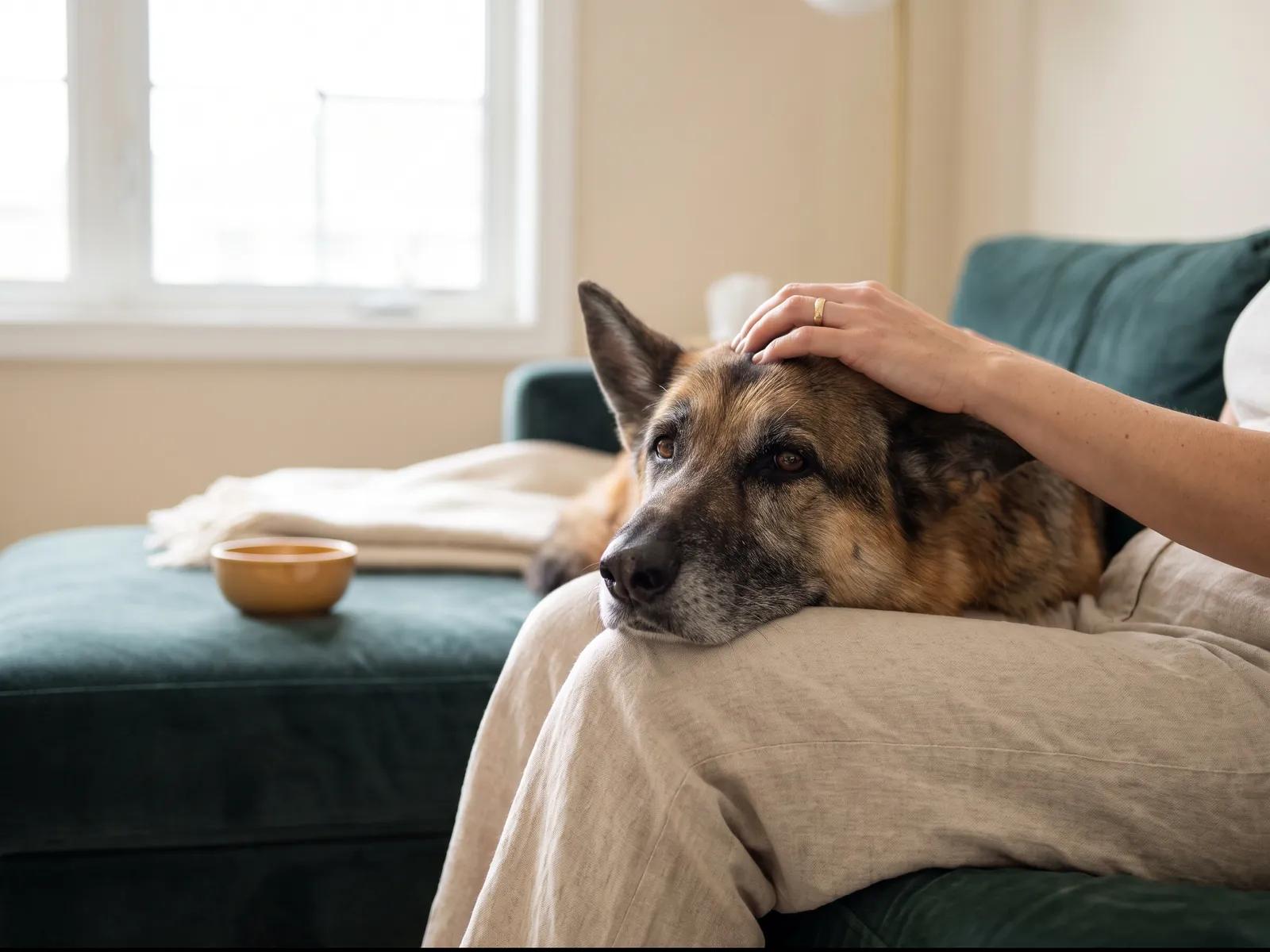
When is a dog considered a senior?
There's no single birthday. AAHA's 2019 Canine Life Stage Guidelines define the senior stage as "the last 25% of estimated lifespan through end of life." AAHA's 2023 senior care guidelines add that there is no specific age for senior status, because dogs age at such different rates.
VCA Animal Hospitals puts it the same way: dogs are generally considered senior once they reach 75% of their average life span. So the useful question isn't only "how old is my dog?" but "how long do dogs like mine usually live?"
That's why a 7-year-old Great Dane and an 11-year-old Chihuahua can both be seniors, while a 9-year-old Chihuahua is still a mature adult.
What age is a senior dog by size?
If you know your dog's adult size, these starting points work for most dogs, mixed breeds included. They're the same ones our free dog age quiz uses to place a dog in a life stage.
- Small dogs, under 20 lb: senior from about 11
- Medium dogs, 20 to 50 lb: senior from about 10
- Large dogs, 50 to 90 lb: senior from about 8
- Giant dogs, over 90 lb: senior from about 7
How does breed change the senior age?
Breed narrows it down. Our Care Profile sets the senior age from your dog's breed, using the last quarter of that breed's typical life span. A few examples, using the life expectancy the American Kennel Club (AKC) lists for each breed:
- Great Dane: typically lives 7 to 10 years, so senior from about 6.
- Labrador Retriever: typically 11 to 13 years, so senior from about 9.
- Chihuahua: typically 14 to 16 years, so senior from about 11.
Why do big dogs age faster than small dogs?
In dogs, smaller usually means longer-lived. A 2022 study in the journal GeroScience calls body size the strongest factor in how long a dog lives, with small dogs outliving large ones by about 5 years on average and by up to 8.
The main reason seems to be speed. The authors explain that large size seems to cost dogs years mainly through a faster rate of aging. The AKC adds that large breeds grow from puppy to adult at a faster rate.
In practice, if you share your life with a big dog, start thinking about senior care earlier than you would for a small one. And remember these are averages: genes, weight, exercise and everyday care all play a part.
What changes when a dog becomes a senior?
Turning senior doesn't mean your dog is suddenly old. It means the body is starting to change in ways that are easier to manage when you notice them early. Common changes include:
- Weight: VCA notes that older dogs need fewer calories, so the same food can lead to weight gain.
- Muscle: less muscle tone makes jumping, climbing and long walks harder.
- Eyes and ears: AAHA notes that senior dogs may see or hear less, so stairs and pools become hazards.
- Teeth and gums: these need more attention, since mouth problems are common in older dogs.
- Energy and sleep: more napping and a slower pace on walks. A sudden change is worth a call to your vet.
How often should a senior dog see the vet?
More often than before. VCA recommends having a senior dog examined at least twice a year, and AAHA's senior care guidelines recommend a medical workup, which may include blood and urine tests, once or twice a year. Regular checks give your vet a baseline, so small changes stand out sooner.
AAHA also urges vet teams to help owners avoid writing off changes as "just old age." Many age-related changes can be helped once someone looks into them.
What should I do when my dog turns senior?
A short checklist for the start of the senior years:
- Book a senior checkup and ask how often your vet wants to see your dog from now on.
- Ask for a target weight, then adjust meals and snacks so your dog stays lean.
- Swap one long walk for two or three shorter ones at your dog's pace.
- Add non-slip rugs on smooth floors, a ramp or steps where they jump, and a night light on the way to the water bowl.
- Keep a simple log of appetite, water, sleep and walks, plus short videos of anything new.
- Keep up teeth care, nail trims and gentle grooming.
- Set up a free Care Profile for a plan that fits your dog's age and breed, with check-in reminders.
From the Stay Sharp shelf


Common questions
›At what age is a dog considered a senior?
It depends on size and breed. AAHA defines the senior stage as the last 25% of a dog's estimated life span. As a rough guide, small dogs are seniors from about 11, medium dogs from about 10, large dogs from about 8 and giant breeds from about 7. A breed with a short typical life, like the Great Dane, can be a senior by about 6.
›Is a 7-year-old dog a senior?
It depends on the dog. A 7-year-old giant breed, such as a Great Dane, is usually a senior. A 7-year-old large dog is getting close, and a 7-year-old small dog usually has a few years to go. Check your dog's size and breed against the guide above, or ask your vet at the next checkup.
›Is one dog year really seven human years?
No. VCA Animal Hospitals calls the seven-year rule a popular misconception and notes that in one calendar year a dog may age the equivalent of 4 to 15 human years. Our free dog age quiz converts your dog's age into human years and shows their life stage.
›Should I give my senior dog a supplement?
Some owners add a senior multivitamin to support healthy aging, or joint soft chews with glucosamine, chondroitin and MSM to support hip and joint health and comfortable movement. They're extras, not a stand-in for checkups. Ask your vet first, especially if your dog takes medicine, and follow the label.
Not sure where to start?
Take the 60-second quiz to see your dog's age in human years and get a daily routine built around them.
Take the dog age quizSources
- 2023 AAHA Senior Care Guidelines for Dogs and Cats (American Animal Hospital Association)
- Senior Dog Care: Special Considerations (VCA Animal Hospitals)
- Wellness Examination in Dogs (VCA Animal Hospitals)
- How Long Do Dogs Live? (American Kennel Club)
- How size and genetic diversity shape lifespan across breeds of purebred dogs (Kraus et al., GeroScience, 2022)
These statements have not been evaluated by the Food and Drug Administration. Kennara products are not intended to diagnose, treat, cure or prevent any disease, and they don't replace veterinary care.