Senior Dogs in Cold Weather: Walks, Paws and Stiff Mornings
Updated November 7, 2026 · 6 min read
The short answer
Senior dogs feel the cold more than younger dogs because they hold on to body heat less well, so winter care comes down to shorter, more frequent walks, a coat for small or thin-coated dogs, and paws kept clean and protected from salt and ice. At home, give them a warm bed off the floor and away from drafts, a slow start on stiff mornings, and good grip on slick floors. Keep antifreeze and ice melt out of reach, and call your vet if your dog seems very cold, sore or unwell.
Why do older dogs feel the cold more?
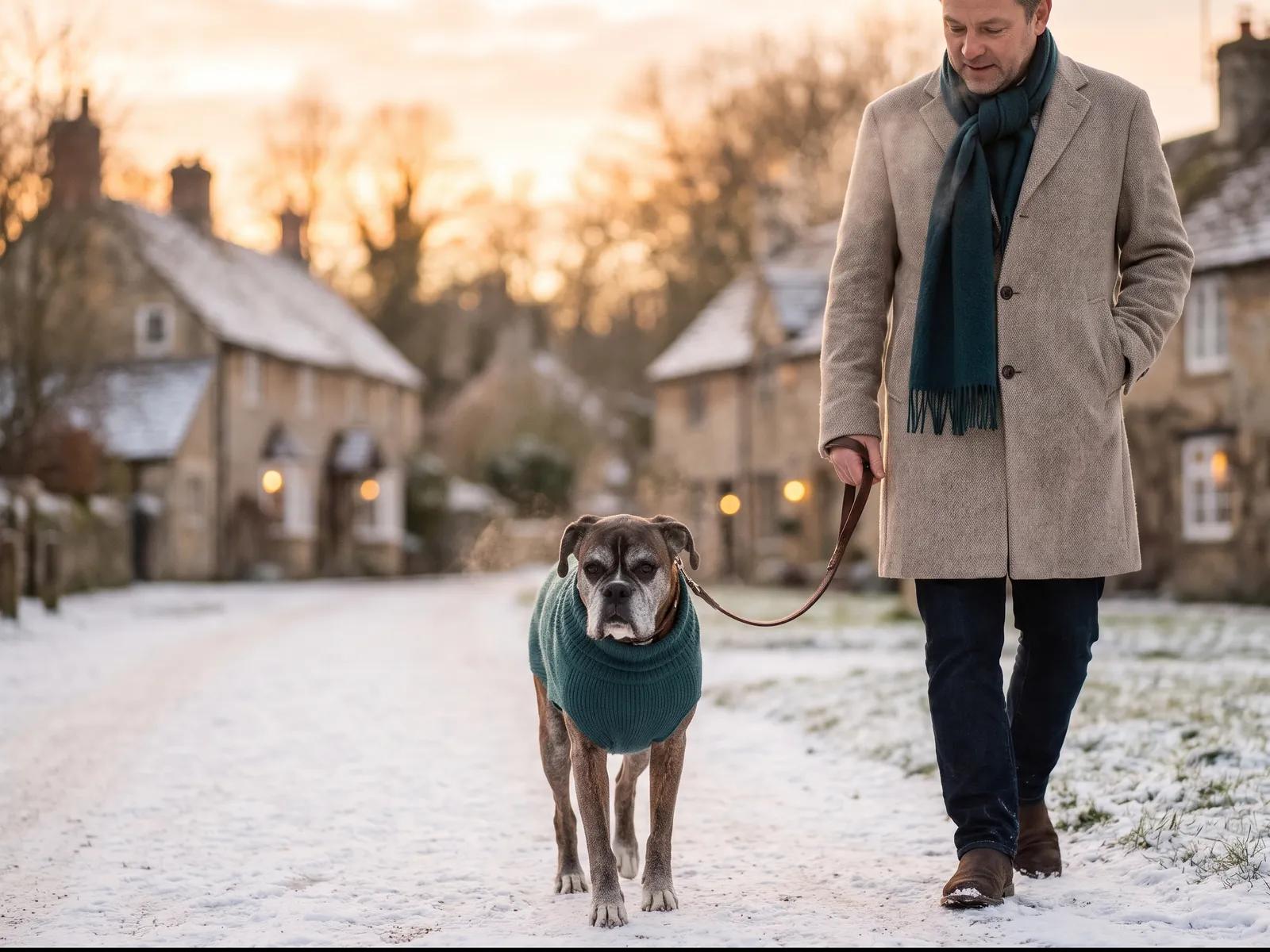
Older dogs often have a harder time holding on to body heat. The American Kennel Club (AKC) notes that very young and very old dogs have a hard time regulating body temperature, and VCA Animal Hospitals lists short-haired, very young and senior dogs as the ones at greatest risk from cold.
Many seniors also carry less muscle and a thinner coat than they used to, and a slower dog spends longer outside to cover the same ground. Small, thin and short-coated dogs feel it first. A simple rule from the ASPCA: if it's too cold for you, it's probably too cold for your pet.
How much should an older dog walk and play in winter?
Most seniors still need daily walks in winter, just shorter ones. Two or three short outings usually suit an older dog better than one long one, ideally in the warmest part of the day. VCA advises keeping walks short in extreme cold, and AKC notes that romps in the snow may be too much for very old dogs.
Make up the difference indoors with sniffing games, food puzzles or a few minutes of practicing familiar cues. Keep an eye on weight, too. The ASPCA notes that pets burn extra energy keeping warm, but most older dogs move less in winter and many gain a little. You should feel the ribs easily under a thin layer of fat. If the weight shifts, ask your vet how much to feed, and count snacks and holiday table scraps.
On every walk, watch your dog rather than the clock. Head home if you see:
- Shivering, a hunched back or a tucked tail
- Lifting one paw after another, or limping
- Slowing down, stopping, or turning for home
- Whining or seeming unsettled
- Ice or snow packed between the toes
Does my senior dog need a coat or sweater?
Many do. AKC suggests a sturdy winter coat and a fitted sweater for small, delicate and short-haired dogs, even large ones like Greyhounds, and seniors who have lost muscle often appreciate one too. The ASPCA recommends a coat with a high collar that covers your dog from the base of the tail to the belly. VCA suggests a weatherproof one, since being wet and cold together is what makes winter walks risky.
- Your dog should walk, sit and squat freely, with no rubbing under the front legs.
- A step-in or wrap style is easier than one that needs a stiff leg lifted.
- Take the coat off indoors so your dog doesn't overheat.
- Don't shave a long-coated dog for winter: the ASPCA notes a longer coat gives more warmth.
How do I protect older paws from salt, ice and de-icers?
Winter is hard on paw pads. VCA explains that cold and ice can dry pads until they crack, and that salt and other ice-melting chemicals can burn them. If your dog licks their feet later, those chemicals end up in the mouth too. AKC adds that fur on the feet can form ice balls between the pads and toes, so keep it trimmed level with the pads.
- Before the walk: rub in a paw balm. VCA describes balm as a barrier between pads and salt that also helps stop ice balls forming.
- After the walk: as the ASPCA suggests, wipe or rinse the paws and belly with lukewarm water, reach between the toes, then dry well.
- Check the pads for cracks, and between the toes for redness.
- Booties give the most cover if your dog will wear them. Try them indoors first, with rewards.
- At home, use a pet-friendly ice melt and keep a salt-free patch shoveled for bathroom breaks.
How can I keep an older dog steady on ice and slick floors?
AKC warns that slipping on ice can lead to muscle strains and other injuries, and older back legs are slower to catch a slide. On icy days, keep your dog on a short leash, walk on snow or grass rather than glazed pavement, spread sand on your own steps, and stay off frozen ponds. A support harness with a handle lets you steady your dog on steps.
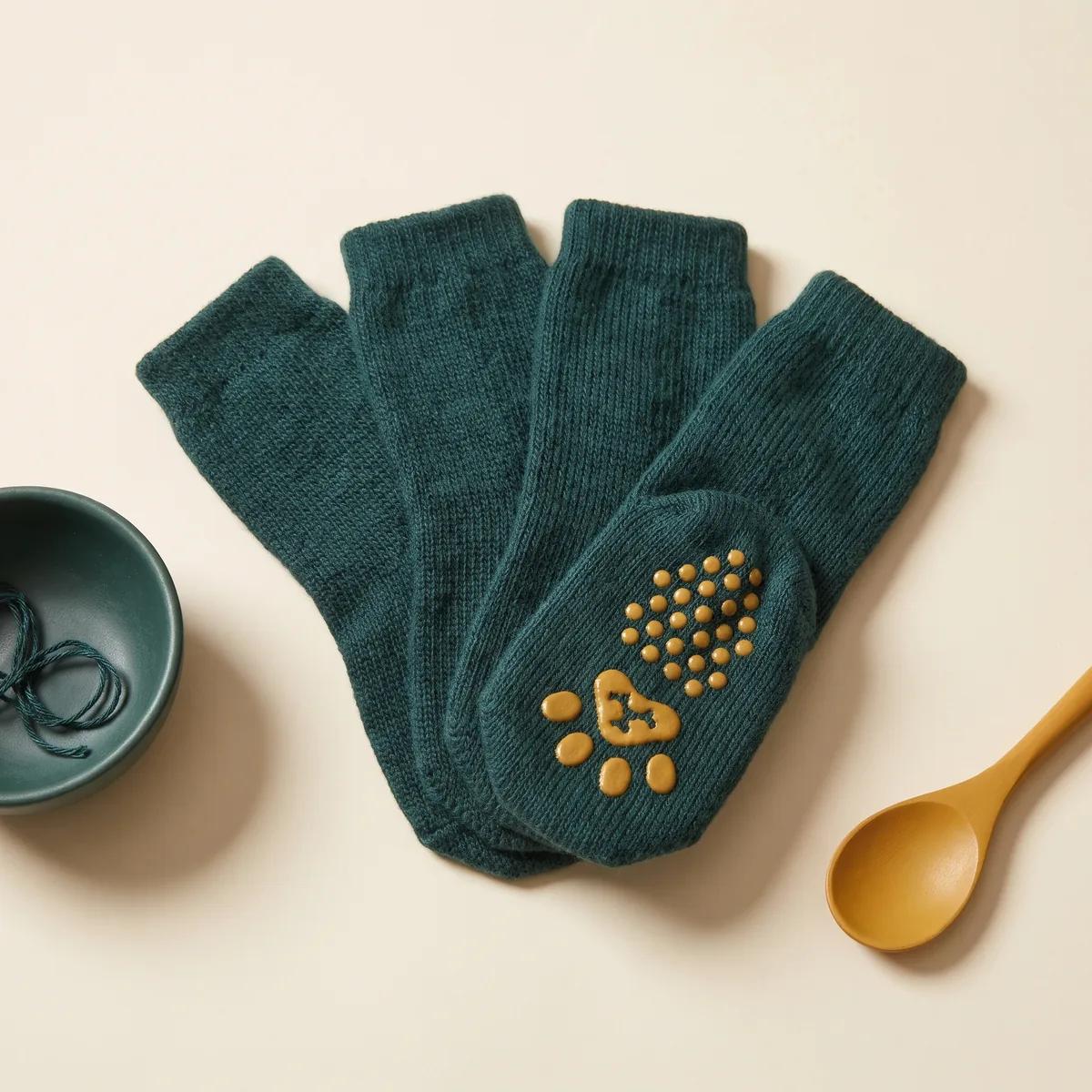
Indoors, the risk moves to the doorway, where wet paws meet tile or hardwood. Keep a rubber-backed mat inside the door and dry paws there. Trim nails regularly, since long nails cut grip. For dogs who skid on smooth floors, non-slip grip socks with rubber dots on the soles add traction indoors: take them off at night, and stop using them if your dog chews them.
How do I help an older dog on stiff winter mornings?
Many older dogs are slowest to get going on cold mornings, and AKC notes that older dogs are more sensitive to changes in temperature. Give your dog a few minutes to stretch and walk around the house, then start each walk at a slow stroll. If your dog is stiff after a walk, AKC suggests shorter outings.
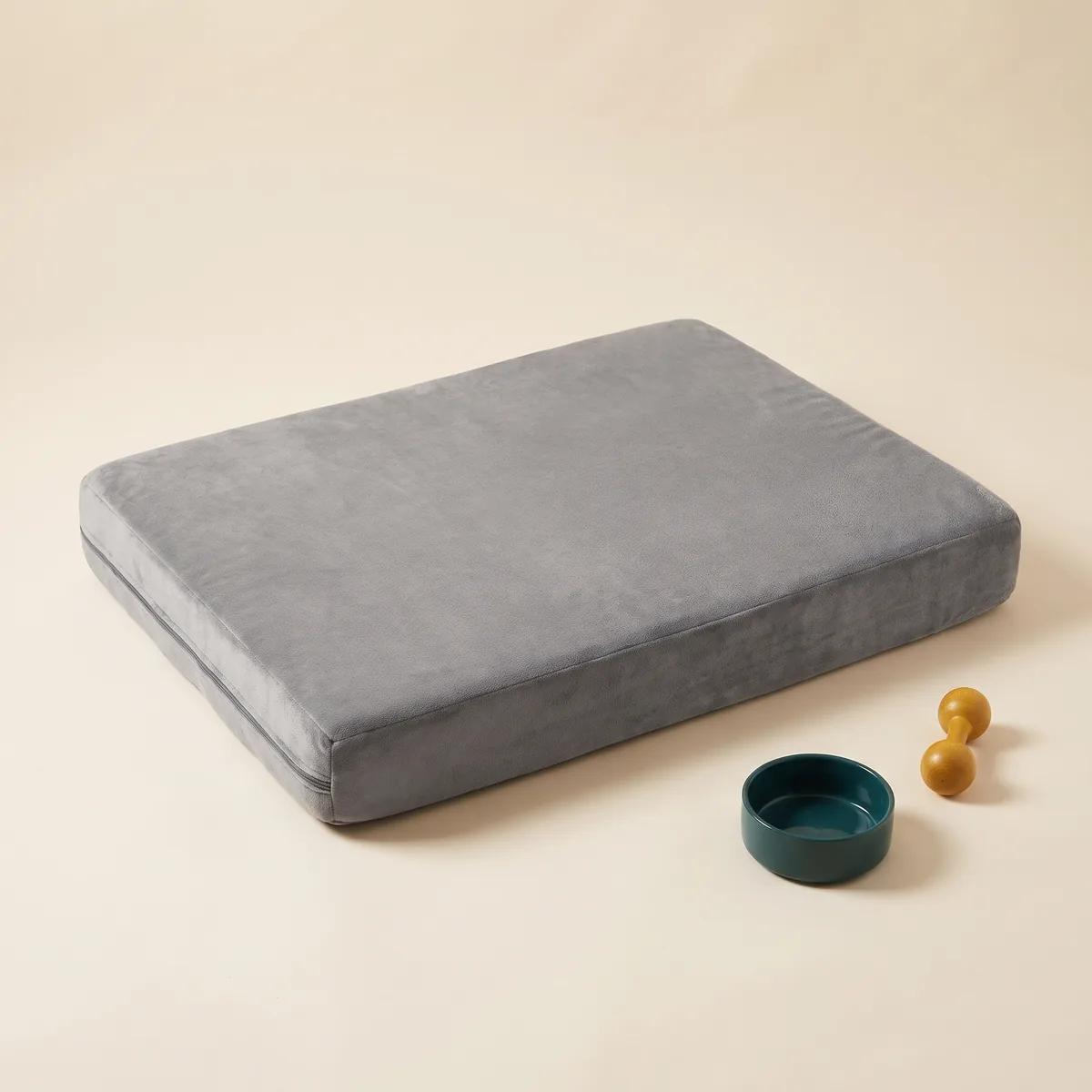
A warm night's sleep helps too. The ASPCA advises a warm place to sleep, off the floor and away from all drafts:
- Move the bed away from outside doors, drafty windows and cold tile.
- A thick memory foam bed keeps your dog off the cold floor and cushions pressure points. A low edge is easier for older legs to step onto.
- Add a washable blanket to curl into.
- If you use a heated bed, AKC suggests one made for dogs with an automatic shut-off. Leave room to move off the warm spot.
Which winter chemicals are dangerous for dogs?
Antifreeze is the big one. VCA explains that ethylene glycol antifreeze has a sweet taste many animals find irresistible, and only a small amount can cause permanent and fatal damage to the kidneys. AKC adds that residue on streets is a danger even if your own antifreeze is locked away, so watch where your dog sniffs and licks near parked cars.
- Store antifreeze tightly closed and out of reach, and wipe up spills right away.
- The ASPCA suggests antifreeze made with propylene glycol rather than ethylene glycol, but VCA cautions that no antifreeze product is truly safe.
- Ice melts can be harmful if eaten too. Keep bags sealed and up high, and read the labels.
- If you think your dog has licked or swallowed antifreeze or ice melt, call your vet, an emergency clinic, or ASPCA Poison Control at (888) 426-4435 right away.
From the Shine On shelf

Common questions
›How cold is too cold for a senior dog?
There's no single temperature, because size, coat, body condition and health all matter. A good rule from the ASPCA: if it's too cold for you, it's probably too cold for your pet. Older, small, thin and short-coated dogs feel the cold first, so keep their walks short in freezing weather, use a coat, and head home if they shiver, lift their paws or slow down.
›Should my old dog wear a coat in winter?
Many older dogs benefit from one, especially small, thin or short-coated dogs and seniors who have lost muscle. Pick a coat that covers from the base of the tail to the belly, lets your dog walk and sit freely, and is easy to put on. Take it off indoors so your dog doesn't overheat, and keep it dry between walks.
›How do I get salt and ice off my dog's paws?
Wipe or rinse the paws with lukewarm water after every walk, reaching between the toes, then dry them well. Gently pick out any ice balls, and wash the belly too, since it collects salt and slush. Check the pads for cracks or redness, and use a lick-safe paw balm to help keep dry pads moisturized and protected.
›Why is my senior dog stiffer in winter?
Many owners notice older dogs are slower to get going on cold mornings. A thick, warm bed off the floor and away from drafts, a few minutes of moving around the house before going out, and walks that start slowly all help. If the stiffness is new, lasts long after your dog is up, or comes with limping, see your vet to check for a medical cause.
›What should I do if my dog licks antifreeze?
Act fast, even if your dog seems fine. Call your vet, the nearest emergency clinic, or ASPCA Poison Control at (888) 426-4435 right away. VCA notes that only a small amount of antifreeze can do lasting harm to the kidneys. Bring the container or note the product name if you can.
Not sure where to start?
Take the 60-second quiz to see your dog's age in human years and get a daily routine built around them.
Take the dog age quizSources
These statements have not been evaluated by the Food and Drug Administration. Kennara products are not intended to diagnose, treat, cure or prevent any disease, and they don't replace veterinary care.